810 Newtons To Pounds-force
Convert 810 newtons to pounds-force with an instant result, the exact formula, and helpful examples for nearby values.
Nearby Newtons to Pounds-force Pages
Related Converters
810 Newtons To Pounds-force
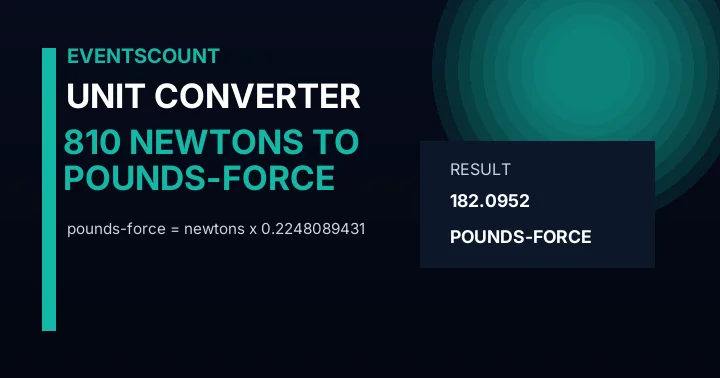
810 newtons is 182.0952 pounds-force. This page gives the direct answer, the formula, nearby values, and a table around this number so the result is easier to verify and compare.
What is 810 newtons in pounds-force?
810 newtons is 182.0952 pounds-force. This answer uses the same formula as the calculator above, so you can change the input value and compare nearby conversions without leaving the page.
Formula
For this conversion, use: pounds-force = newtons x 0.2248089431. Enter any value above and the calculator applies the same formula automatically.
Newtons to Pounds-force Examples
The table below stays close to 810 instead of repeating the same generic examples. That makes it easier to compare nearby force values from newtons to pounds-force.
About Newtons
Newtons measure force in physics, engineering, product ratings, loads, tension, and mechanical calculations.
About Pounds-force
Pounds-force are used for load ratings, engineering, mechanics, equipment specs, and force comparisons.
Why Newtons to Pounds-force Matters
Force conversions are used in physics, engineering, load ratings, tension, equipment specs, mechanics, and science problems. Useful for physics problems, engineering notes, load ratings, product specs, and force comparisons.
Common Uses
Use it for physics, engineering, loads, tension, product ratings, mechanics, and force comparisons.
How to Read the Result
Read the result as a direct comparison between newtons and pounds-force. The calculator keeps the formula visible, so you can confirm whether the answer needs a rounded everyday value or a more precise decimal value.
When This Conversion Helps
Useful for physics problems, engineering notes, load ratings, product specs, and force comparisons. The live calculator is there for one-off values, while the dedicated pages for values from 1 to 1000 make common conversions easy to open, share, and compare.
Common Mistake to Avoid
The common mistake is rounding too early or copying the wrong unit label. Keep the unit with the number, then round only after the final result is clear.
Accuracy and Rounding
For most everyday uses, the rounded result is enough. When the number is used for engineering, ordering parts, medical records, legal documents, or safety-critical work, keep more decimal places and confirm the required standard.
Quick Check
If the number only needs to be approximate, you can use a rounded mental estimate. When the exact result matters for a label, order, assignment, workout, measurement sheet, or technical note, use the calculated value shown above and keep the formula visible for verification.